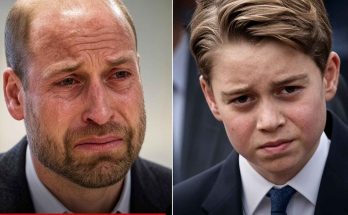
King Charles III and Prince William held a reported private conversation described as unusually personal, in which the king spoke about choices made under the pressure of the crown and the effect of his first marriage’s failure on his sons, according to accounts circulating among royal observers.
Buckingham Palace has not confirmed the meeting or its contents. The House of Windsor has long kept family conflict behind official duty, with restraint rather than public confession serving as the monarchy’s working method.
The reported exchange, if accurate, would mark a departure from that habit: a father and heir speaking without the usual buffer of aides, briefings and ceremony. Those accounts say Charles did not offer a sweeping apology, but instead spoke about choices made under the pressure of the crown, a failed first marriage and the effect of that history on his sons. William, they add, listened as a man who has spent his adult life preparing to inherit the same institution that shaped his childhood.
William was 15 when Diana, Princess of Wales, died in a Paris car crash in August 1997. He and Prince Harry walked behind her coffin in public view, an image that remains one of the defining pictures of modern royal history. Harry later left royal life, settled in California and published a memoir that aired family grievances, while William stayed inside the institution and has had no public reconciliation with his brother.
Any reported reckoning between Charles and William also sits against a live controversy. This month, Diana’s brother, Charles Spencer, published Swan Song: Diana, My Sister. The book revives disputed claims about the days after Diana’s death, including an alleged argument over whether the princes should walk in the funeral procession
Commentators have said both the king and the Prince of Wales are angry at the revival of that period. The palace has pushed back on Spencer’s account of the king’s manner after the princess’s death.
Private royal conversations are rarely verified. Leaks often reflect competing camps rather than a complete record. Palace watchers therefore treat claims of a “highly emotional” father-son encounter with caution.
What can be stated is narrower: Charles and William remain publicly aligned on the work of the monarchy; Harry remains estranged from William; and the king has, separately, taken steps toward limited contact with his younger son. The unresolved question in those reports is whether any private candor between Charles and William changes the wider family split.
Institutional continuity does not, by itself, settle personal history. If there is to be a lasting settlement among the three men, it will not be arranged through balcony appearances or official statements. It would require conversations that the palace, by design, does not confirm.
For now, the reported dialogue is just that: reported. The public record shows an aging king, an heir bound to the crown, a younger son living a different life, and a new book forcing old wounds back into view.