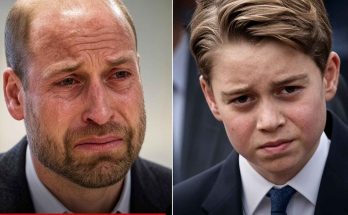
Even the most intimate family moments were eventually transformed into photographs, headlines, documentaries, biographies, and competing versions of history. But according to those describing the encounter, something about this conversation was different.
Charles was not speaking as the monarch. William was not listening as the heir. For once, they were simply two men confronting the consequences of a family history neither could escape.
Charles reportedly struggled to find the words. There was no sweeping declaration, no perfectly constructed apology capable of resolving decades of grief in a few sentences. Instead, his thoughts allegedly came slowly, the way words sometimes emerge when someone has spent years avoiding them.
For William, that hesitation may have mattered as much as anything Charles actually said. His father had spent a lifetime inside an institution where emotion was controlled, appearances protected, and private difficulties handled behind doors the public was never supposed to see. William had learned the same discipline almost from childhood.
That discipline intensified after Princess Diana was killed in Paris in August 1997. William was only fifteen. Harry was twelve. The world remembers what came afterward through iconic images: flowers stretching outside palace gates, crowds lining London streets, a coffin draped in the Royal Standard, and behind it, two boys walking through an ocean of public grief while experiencing something painfully private.
Millions watched them. Few could know what it felt like to be them. William later spoke about how difficult that funeral procession had been, describing the strange experience of hearing people crying around him while he was trying to maintain composure.
There was an expectation surrounding the boys that went beyond ordinary mourning. They weren’t simply Diana’s sons. They were princes. And royalty had rules: stand straight, do not collapse, do not give the cameras the moment they are waiting for.
The images became part of British history. For William and Harry, they were also memories of their mother’s funeral. That distinction has never disappeared.
Years later, both brothers would describe the consequences of growing up beneath that level of scrutiny in different ways. William largely moved deeper into the institution. Harry eventually moved away from it. Those choices created another fracture.
The brothers who once walked together behind their mother’s coffin became adults separated by geography, duty, resentment, competing loyalties, and very different ideas about what survival inside the royal family required. Charles stood somewhere between them, and inevitably, part of the history both sons were still trying to understand.
According to accounts surrounding the private exchange, Charles spoke with regret about choices made when he was younger and about decisions shaped by responsibility, fear, relationships, and the expectations surrounding the monarchy. If accurately reported, such a conversation would represent something unusually difficult within this family—not because regret itself is extraordinary, but because saying it aloud can be.
Royal families survive partly through continuity. They rarely function by publicly reopening every emotional wound of the previous generation. The institution moves forward. Another reign begins. Photographs change. The balcony fills with different faces. But families don’t reset themselves as easily as monarchies do.
William remembers being a boy whose parents’ marriage disintegrated in front of the world. He remembers his mother’s interviews becoming national events. He remembers newspapers turning private family conflict into public entertainment. And, above everything else, he remembers losing her.
No confession from Charles could rewrite that history. An apology cannot return a mother. Regret cannot transform a childhood already lived. But acknowledgment can still matter.
There is a particular kind of pain created when families refuse to name what everyone already knows happened. Silence doesn’t erase history. It merely forces each person to carry their own version of it.
If Charles finally allowed himself to acknowledge regret directly to William, the significance may lie less in solving the past than in ending some portion of that silence. For William, however, hearing those words could also reopen everything he had spent decades learning to contain.
People often imagine closure as relief. Sometimes it begins as the opposite. Sometimes finally hearing what you’ve waited years to hear forces you to revisit pain you had carefully organized just to keep functioning.
William‘s public identity has been built largely around stability. He has become the figure expected eventually to inherit not only the crown but responsibility for preserving the monarchy itself. That makes his position complicated. He can question what the institution demanded from his childhood while simultaneously preparing to lead that same institution. He can love his father while being hurt by choices his father made.
And then there is Harry, thousands of miles away in California. He has spent years speaking far more openly about grief, resentment, family conflict, and the psychological consequences of royal life. His version of events has often collided dramatically with the palace’s preference for silence. Distance offered Harry a different life, but it did not erase the past.
The same funeral procession belongs to both brothers. The same mother is missing from both their lives. The same childhood produced two very different adult responses. That is why any genuine reckoning involving Charles and William inevitably casts a shadow toward Harry as well.
If one son hears regret, what does the other need to hear? Would the same words help? Would they come too late? Would they be accepted as sincere or interpreted through years of mistrust? Nobody outside the people involved can answer those questions.
Reports attributed to unnamed insiders deserve caution. Private royal conversations are notoriously difficult to verify, and supposed quotations or emotional details can quickly become more definitive in retelling than the available evidence warrants. But the deeper possibility remains compelling because it touches something larger than royalty.
Families often spend years protecting themselves with roles: the responsible son, the difficult brother, the distant father, the peacemaker, the troublemaker. Eventually, those roles become so familiar that everyone forgets there are frightened, grieving, imperfect people underneath them. A title can intensify that problem.
If reconciliation ever comes, it probably won’t arrive as a grand royal moment. There will be no balcony appearance capable of repairing decades. No official photograph can establish forgiveness. No palace statement can manufacture trust. It would have to happen privately and imperfectly: one conversation, an acknowledgment without an immediate defense, an apology without demanding forgiveness in return, a son willing to listen, a father willing to hear anger, brothers willing, eventually, to recognize that they may have survived the same pain differently.
None of that guarantees reconciliation. Some wounds alter relationships permanently. Forgiveness, if it comes at all, doesn’t necessarily restore what existed before. Sometimes redemption means rebuilding. Sometimes it means accepting responsibility. And sometimes it means finally refusing to pretend that nothing was broken.
Families are not granted redemption through changing the past. They find it, when they can, through what they choose to do after finally admitting what the past cost. If this family has reached that moment, the next chapter will not be decided by monarchy. It will be decided by whether three men, carrying the same history in painfully different ways, can stop defending their versions of the past long enough to build any kind of future together.