Judge Denies Kirk Family’s Request for Full Evidence Disclosure in Robinson Preliminary Hearing
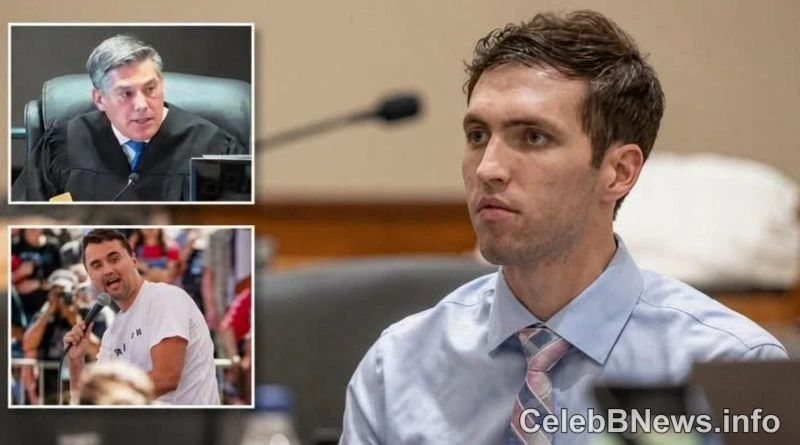
PROVO, Utah — A judge has rejected the Kirk family’s request to have all exhibits disclosed in the Robinson preliminary hearing, including materials prosecutors characterize as a potential confession from Lance Twiggs, Tyler Robinson’s partner, according to court filings reviewed on Monday.
The ruling came as the Robinson preliminary hearing entered its second day, with prosecutors continuing to present forensic evidence in support of charges that Robinson fatally shot Charlie Kirk during a campus event. The decision to limit exhibit disclosure marks a significant development in what has become a highly publicized legal proceeding, with questions about public access and media coverage adding layers of complexity to the case.
DNA Evidence Takes Center Stage in Robinson Preliminary Hearing
Jennifer Faumina, a sergeant with the Utah Department of Public Safety assigned to the State Bureau of Investigation at the time of the shooting, provided crucial testimony regarding DNA analysis findings. According to Faumina’s courtroom statements, investigators identified male DNA belonging to Twiggs on two significant items recovered during the investigation.
“Male DNA was obtained from item 7-1,” Faumina testified. “Item 7-1 was interpreted as originating from two individuals, one of whom is Twiggs.” She further testified that similar DNA evidence was discovered on a second piece of evidence, explaining that “Male DNA was obtained from item eight sub one. Item eight sub one was interpreted as originating from two individuals, one of whom is Twiggs.”
The items in question included a screwdriver recovered from the rooftop of the Losee Center for Student Success and a towel that had been wrapped around the rifle allegedly used in the shooting, according to court records.
Further forensic analysis presented during the Robinson preliminary hearing revealed detailed statistical breakdowns of DNA contributions. FBI forensic examiner Amanda Bakker provided testimony regarding the relative contributions of each individual’s DNA found on the recovered items.
“When I calculated the statistics, [Lance] Twiggs’ DNA profile aligned with the 5% contributor and [Tyler] Robinson’s DNA profile aligned better with the 95%,” Bakker testified, according to court transcripts. This breakdown suggested significantly higher DNA presence from Robinson on the key evidence items, supporting the prosecution’s narrative regarding his involvement.
Utah Supreme Court Upholds Preliminary Hearing Timeline and Camera Restrictions
Last week, the Utah Supreme Court cleared the way for the Robinson preliminary hearing to proceed as originally scheduled, declining to hear the defense’s appeal of two critical pretrial rulings by Judge Tony Graf. The state’s highest court rejected the defense’s challenge to Graf’s decisions permitting cameras in the courtroom and allowing certain hearsay evidence during preliminary proceedings.
“The petition for permission to appeal from an interlocutory order is denied. The motion to stay is deemed moot,” the Utah Supreme Court stated in its formal order, effectively removing obstacles to the hearing’s continuation.
The question of camera access in the courtroom has been a recurring point of contention throughout pretrial proceedings. Defense attorneys initially sought appellate review of Graf’s rulings in May after the judge rejected their request for a blanket prohibition on electronic media coverage. The defense also requested that Graf postpone the preliminary hearing pending the Supreme Court’s decision, but that motion was denied.
Judge Establishes Media Coverage Guidelines for Robinson Preliminary Hearing
Judge Graf had previously established that requests for electronic media coverage would be evaluated on a case-by-case basis rather than through blanket policies. Under this framework, news organizations must submit camera and electronic equipment requests at least 14 days before scheduled proceedings, while either party may petition the court to restrict or prohibit such coverage.
Following these established procedures, the defense sought to bar cameras from the preliminary hearing. Graf rejected nearly all of the defense’s requests, granting only a single motion related to still photography submissions that failed to meet the court’s filing deadline. This selective approach has allowed significant public and media access to the Robinson preliminary hearing while respecting certain confidentiality concerns identified by the court.
The Robinson preliminary hearing is expected to continue throughout the week, with prosecutors methodically presenting their case and defense counsel preparing their response. The proceedings remain a closely watched development in what has become a high-profile criminal case with substantial public interest and national media attention.